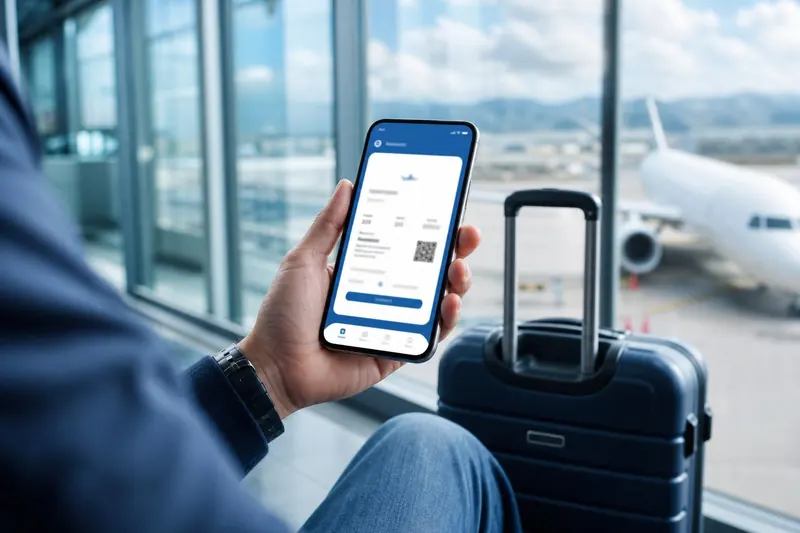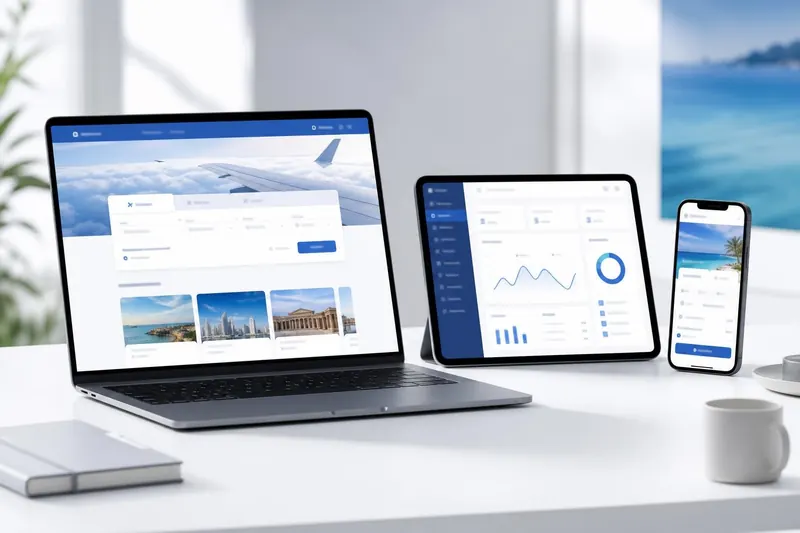
The difference in a B2B vs B2C travel portal comes down to who books: a B2C portal sells flights, hotels and packages directly to travellers, while a B2B portal lets other travel agents log in and book on behalf of their own customers. B2C is about marketing and conversion, whereas B2B is about agent relationships, credit control and reliable net pricing. Many growing agencies eventually run both from one system, but it pays to understand each model before you choose where to start.
What is a B2C travel portal?
A business-to-consumer travel portal is the public booking website most people picture when they think of online travel. Anyone can visit, search for a flight or hotel, see a final price and pay by card or bank transfer. The agency earns its margin by adding a markup or service fee to the supplier's net rate.
Success in B2C depends heavily on traffic and trust. You compete for attention with large international brands, so you need a clear niche, a fast and mobile-friendly website, honest pricing and responsive support. Each customer may book only once or twice a year, which makes repeat business and word of mouth especially valuable.
What is a B2B travel portal?
A business-to-business travel portal is a private, login-only booking system for travel agents. Instead of selling to travellers, you supply smaller agencies, sub-agents or corporate partners with access to your flight, hotel and package inventory. They book through your portal, often see net or discounted prices, and then charge their own customers whatever they choose.
Your value to these agents is access and service. You may hold supplier contracts, accreditation or negotiated rates they cannot get on their own, and you give them a ready-made tool so they do not need to build one. In return, you earn from the margin between your cost and the price you set for agents, and from the volume a network of agents generates.
B2B vs B2C travel portal compared side by side
The two models share the same core booking engine, but almost everything around it works differently. The table below summarises the main contrasts.
| Area | B2C travel portal | B2B travel portal |
|---|---|---|
| Who books | Individual travellers and families | Registered travel agents and sub-agents |
| Access | Public website, open to anyone | Private login, agents approved by you |
| Pricing shown | Final retail price including your markup | Net or agent price, with room for the agent's own markup |
| Payment | Card gateway or bank transfer per booking | Prepaid wallet, credit limit or periodic settlement |
| Main growth driver | Marketing, search visibility and conversion | Agent recruitment, service and reliable rates |
| Booking volume per account | Low, often occasional | Higher and more regular |
| Key risk | High acquisition cost and price comparison | Credit exposure and dependence on a few large agents |
| Support style | Consumer support, often outside office hours | Account management and fast operational help |
Features each model needs
Essentials for a B2C portal
- A fast, mobile-friendly search and booking flow with clear prices from the first screen.
- Card payment gateways and bank transfer, with immediate confirmation emails.
- A traveller account where customers can see bookings, download documents and request changes.
- Content pages for destinations, packages and offers that can rank in search engines.
- Multi-language and multi-currency support if you serve more than one market.
Essentials for a B2B portal
- Agent registration with approval, so only vetted businesses can book.
- Agent wallets that are topped up in advance and debited automatically per booking.
- Credit limits for trusted agents, with clear visibility of what each one owes.
- Flexible markup rules by agent, agent group, product or destination.
- Multi-level agent structures if your agents have their own sub-agents.
- Statements, booking reports and invoices agents can download themselves.
Wallets and credit limits are where B2B portals succeed or fail financially. Our guide to managing sub-agent wallets and credit limits covers how to set limits, handle top-ups and reduce the risk of unpaid balances.
Advantages and drawbacks of each approach
B2C gives you direct ownership of the customer relationship and usually a higher margin per booking. You set the retail price, you control the brand experience and you build a customer list that can be marketed to again. The drawback is the cost and effort of attracting those customers in the first place, along with price-sensitive shoppers who compare several sites before they buy.
B2B can produce steadier volume with lower marketing spend, because a single active agent may book many times a month. Margins per booking tend to be thinner, since agents need room to add their own markup. You also take on new responsibilities: approving agents, managing credit, and providing the kind of quick operational support a busy agent expects when a booking goes wrong.
How pricing and markups work in each model
In a B2C portal, pricing is usually a single layer. You take the supplier's net rate, add your markup or service fee, and show the traveller one final figure. The main questions are how much to add for each product and whether the result is competitive with what the traveller will find elsewhere.
A B2B portal adds at least one more layer. You set the price each agent sees, and the agent then adds their own markup before quoting their customer. With multi-level structures, a main agent may set prices for their own sub-agents too. As an illustration, a hotel room might carry your margin for agents in one group, a slightly lower margin for a high-volume partner, and a separate margin applied by the agent when they resell it. Your portal needs to calculate each layer correctly and show every party only the price meant for them.
- Keep markup rules simple at first, then refine them by product, destination or agent group as you learn.
- Review margins regularly against supplier changes so that agent prices stay competitive.
- Make sure agents can see their own earnings clearly, because transparency builds loyalty.
Day-to-day operations in B2B and B2C
The support load looks different in each model. B2C customers often need reassurance and step-by-step help, ask questions late in the evening and may be booking international travel for the first time. B2B agents usually know the product well but expect fast answers, because they have their own customer waiting. A failed ticket or an unconfirmed hotel affects their reputation as well as yours.
Plan your team, opening hours and escalation process around whichever audience you serve. In a hybrid model, it often helps to give agents a dedicated contact or channel so their urgent issues are not queued behind general enquiries.
When a hybrid model makes sense
Many agencies end up running both models. A typical pattern is to start with a public B2C website, build supplier relationships and operational experience, and then open a B2B portal once other agents start asking to book through you. The reverse also happens: a wholesaler with a strong agent network launches a consumer website to reach travellers directly.
A hybrid works best when both channels share one back office. Bookings, suppliers, markups and reports sit in one place, while customers and agents each see their own interface and their own prices. Running two separate systems usually leads to duplicated work and mismatched data.
How to decide which to launch first
- Look at your existing relationships. If you already know dozens of agents who need better access to flights, hotels or Umrah packages, B2B may be the faster route to volume.
- Assess your marketing strength. If you can attract travellers through search, social media or community networks, B2C lets you keep more margin per booking.
- Check your cash position. B2B with credit requires working capital to cover agents' bookings before they pay you. Prepaid wallets reduce that pressure.
- Consider your supplier terms. Some rates and contracts allow resale to other agents, while others are restricted to direct sales. Read your agreements before you plan a B2B channel.
- Plan for both. Even if you start with one model, choose software that can add the other without a rebuild.
If you are at the very beginning, our guide on how to start an online travel agency covers licensing, suppliers and payments in more depth before you commit to either model.
Next steps
TravelBookingPanel includes a customer booking website, an admin back office and a traveller account on every plan, so you can run a B2C portal from day one. The B2B agent portal is added on the Agency plan ($2,999) with agent wallets and advanced markup rules, while the Enterprise plan ($4,999) adds credit limits and multi-level agents. Every plan is a one-time licence with full source code and no booking commission. Compare plans on the pricing page or talk to our team about your model.
Frequently asked questions
What is the main difference between a B2B and a B2C travel portal?
A B2C portal sells directly to travellers at retail prices on a public website. A B2B portal is a private, login-only system where approved travel agents book at net or agent prices and resell to their own customers.
Can one system run both B2B and B2C?
Yes. Many agencies run a public booking website and a private agent portal from the same back office, sharing suppliers, bookings and reports while showing each audience its own prices and interface.
Is B2B or B2C more profitable for a travel agency?
It depends on your situation. B2C usually earns more per booking but costs more to market. B2B often brings higher, steadier volume at thinner margins and requires careful credit control. Your relationships, marketing ability and cash position decide which suits you.
How do agents pay in a B2B travel portal?
Common methods are prepaid wallets that agents top up in advance, credit limits for trusted partners with periodic settlement, or a mix of both. Wallets reduce your financial risk, while credit can help win larger agents.